

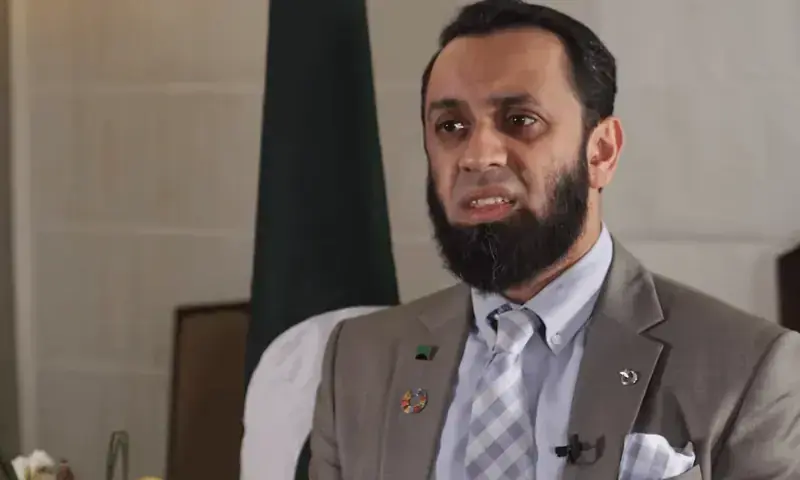
Information Minister Ataullah Tarar said on Monday that the government was considering reviving austerity measures introduced during a previous fuel conservation drive amid renewed hostilities in the Middle East.
The austerity measures were announced on March 9 to mitigate the impact of the ongoing US-Iran war. These included a 50 per cent cut in fuel allowances for official vehicles, salary cuts for lawmakers, and a partial work-from-home policy in the public sector.
Tarar made the remarks while addressing a press briefing alongside Information Technology Minister Shaza Fatima Khawaja and Petroleum Minister Ali Pervaiz Malik on the government’s fuel relief scheme, which was launched on Sunday amid rising oil prices.
In response to a question, the information minister said Prime Minister Shehbaz Sharif had directed consultations on the austerity measures, some of which, he noted, “are still in force, such as market timings”.
Tarar added that “austerity measures previously taken [..] were being reviewed to assess which of the previous measures need to be revived in the present situation”.
He added that a decision will be taken soon.
The government ended the measures on June 19, except for market timings. However, in July, it emerged that it was considering shifting back to fuel conservation and austerity measures.
The move comes amid renewed hostilities in the Middle East, which have disrupted major oil supply routes and led to a rise in fuel prices.
In addition to the crisis in the Strait of Hormuz stemming from the US-Iran war, trade through Bab al-Mandab — which has become a vital route for Saudi oil exports in recent months — is also facing a growing threat from Houthi rebels.
At present, the price of petrol stands at Rs375.82 per litre, while high-speed diesel (HSD) costs Rs403.32 per litre.
Relief scheme to cost around Rs25bn monthly
Speaking about the relief scheme, under which users of motorcycles, rickshaws, Qingqis and vehicles up to 800cc will receive relief of Rs100 per litre, Tarar said the premier had directed Deputy Prime Minister and Foreign Minister Ishaq Dar to ensure that transport fares did not rise following the launch of the scheme.
Tarar also said the steering committee for the scheme would include the chief secretaries of all four provinces, Azad Jammu and Kashmir (AJK) and Gilgit-Baltistan.
In his address, Tarar said a war room and a call centre had been established under the scheme and that “constant monitoring is going on”.
The petroleum minister, addressing the press briefing, said efforts were underway to ensure fuel availability.
“Today, I met with private oil refineries and discussed with them for one hour how to ensure that in September or October and even if any issues emerge in the Bab al-Mandab, how we can ensure fuel availability and distribute the burden evenly,” he said.
He said the government’s takeaway from the present situation should be that “it should be prepared to deal with such a crisis in the future”.
On the reduction in the petroleum levy, the minister referred to the relief scheme and said the government was taking steps to ease the fuel burden “despite buying fuel at twice the cost”.
Malik said the premier was personally supervising work on “strategic petroleum reserves, bonded schemes”.
He further said the targeted relief was estimated to cost roughly Rs25 billion a month, adding that “the federal government and the Ministry of Finance have given assurances”.
Finance minister approves fuel relief scheme
The cabinet’s Economic Coordination Committee (ECC) convened at the Finance Division on Monday for a meeting chaired by Finance Minister Muhammad Aurangzeb, who approved Prime Minister Shehbaz Sharif’s fuel relief package.
According to a press release issued by the Finance Division, the ECC reviewed the Petroleum Division’s summary on the fuel relief scheme. Under the scheme, two- and three-wheelers will receive relief of Rs500 per week, equivalent to five litres at Rs100 per litre, while cars up to 800cc will receive Rs1,000 for 10 days, based on 30 litres per month at Rs100 per litre.
The plan will be restricted to non-commercial users, with relief limited to one vehicle per owner.
Meanwhile, the Ministry of IT and Telecom will deploy and manage the Fuel Pass System (FPS) for the digital management and transparent delivery of the scheme’s benefits.
“The targeted and digitally managed mechanism is aimed at ensuring that the benefit reaches eligible consumers efficiently while strengthening transparency and accountability in implementation,” the statement read, adding that the ECC approved a Rs75 billion technical supplementary grant to implement the scheme.
The post Govt mulling revival of austerity measures, decision to be taken soon: Tarar appeared first on Dawn – Home.