|
Getting your Trinity Audio player ready...
|
Pakistan is going through a very difficult time. Political tension, economic uncertainty and the rising cost of living are all affecting ordinary people. Over the past several months, the political situation has become more tense, with growing friction between the state establishment and political forces, particularly the Pakistan Tehreek-e-Insaf (PTI). At the same time, the economy is struggling to provide relief to ordinary citizens, while the prices of
By Sareer Ahmad Malik
Pakistan is going through a very difficult time. Political tension, economic uncertainty and the rising cost of living are all affecting ordinary people. Over the past several months, the political situation has become more tense, with growing friction between the state establishment and political forces, particularly the Pakistan Tehreek-e-Insaf (PTI). At the same time, the economy is struggling to provide relief to ordinary citizens, while the prices of essential goods and services continue to rise.
This instability is not limited to politicians, parliament or government offices. People are feeling it in their homes, shops, workplaces and on the roads. When there is political uncertainty, businesses become careful, investment suffers, transport can be disrupted and families become worried about their future. The people with the least money are usually the ones who suffer the most because they have very few options when prices and costs increase.
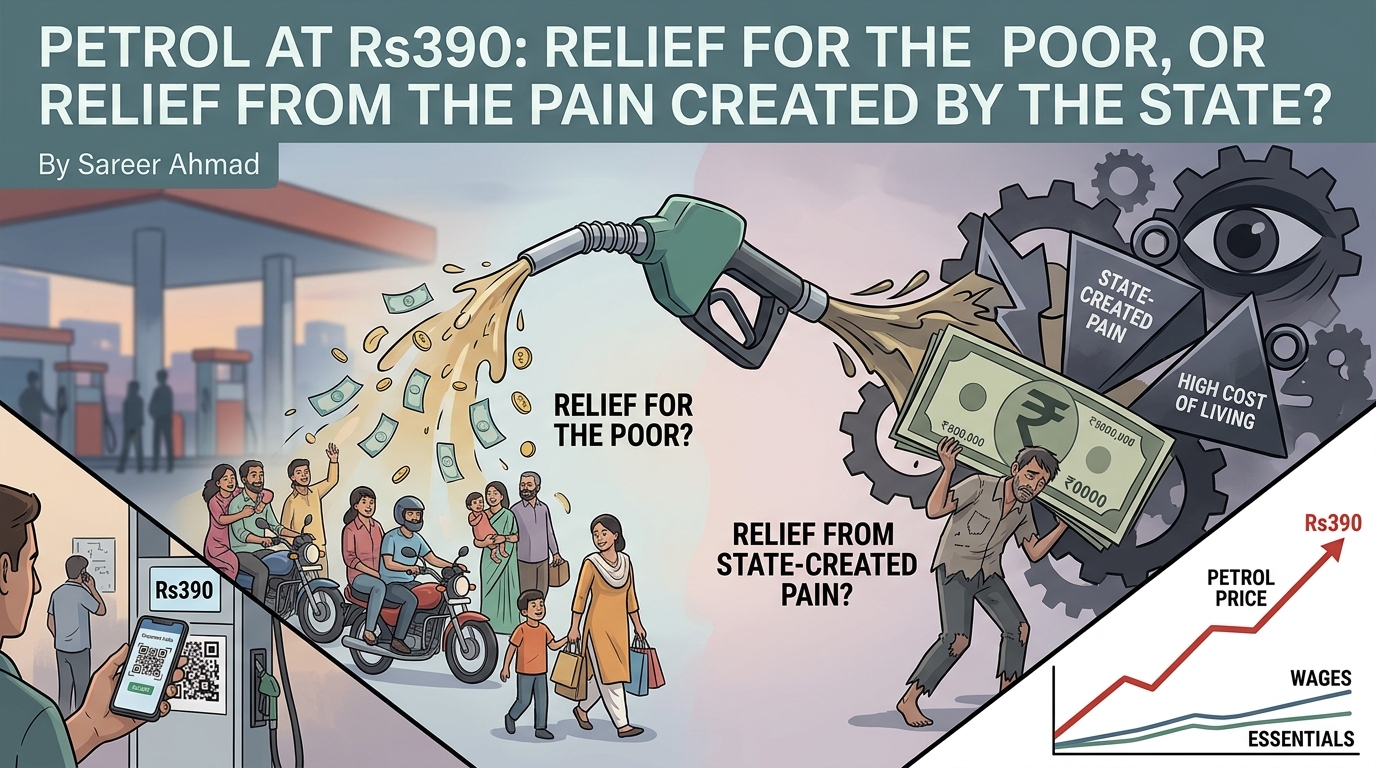
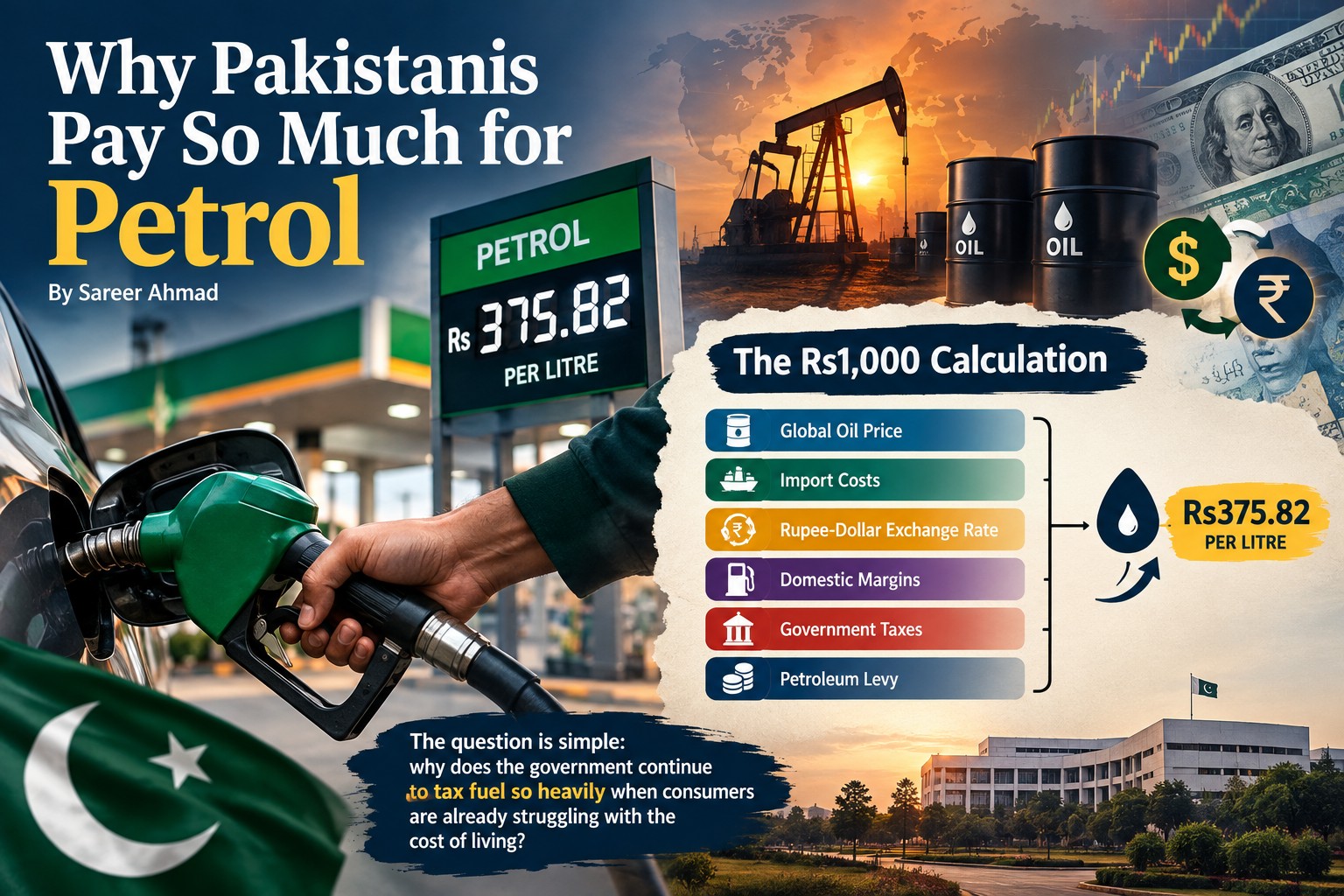
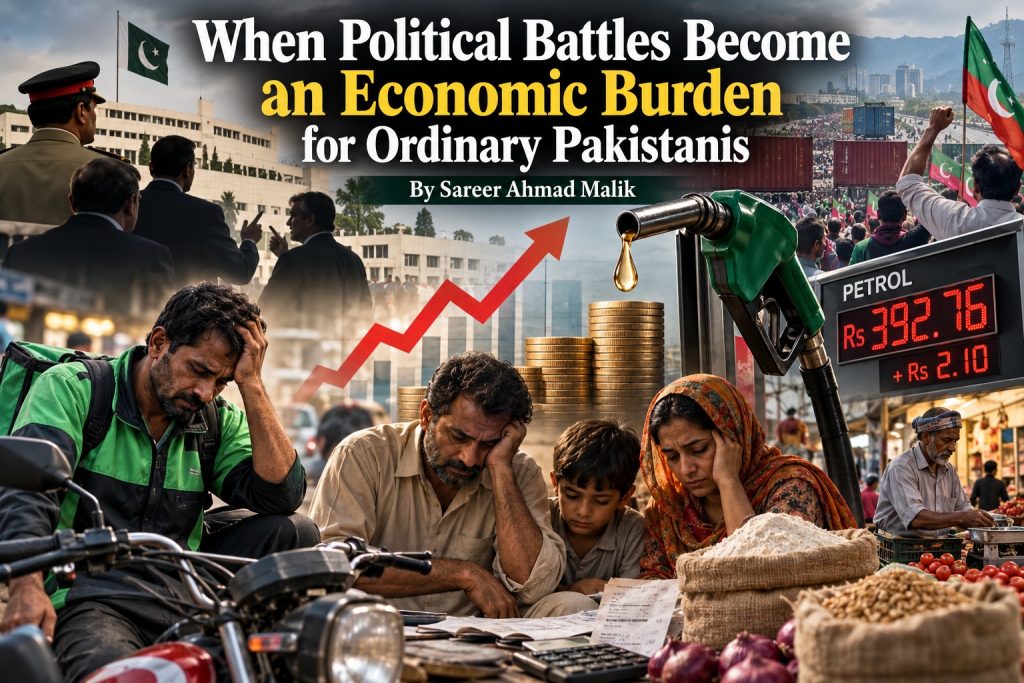
Fuel prices are one of the clearest examples of this pressure. Petrol has reached around Rs392.76 per litre, following another increase of Rs2.10 per litre. For a middle-class family, this means a higher monthly transport cost. But for a delivery rider, driver, small trader or daily wage worker, the impact is much bigger because petrol is not just an expense—it is part of the cost of earning a living.
Take the example of a motorcycle or delivery rider who earns around Rs2,000 to Rs3,000 in gross income during a working day. A large part of that money can go toward petrol, maintenance, food and other daily expenses before the rider can take anything home. A small increase in the price of petrol can therefore mean a real reduction in the money available to support a family.
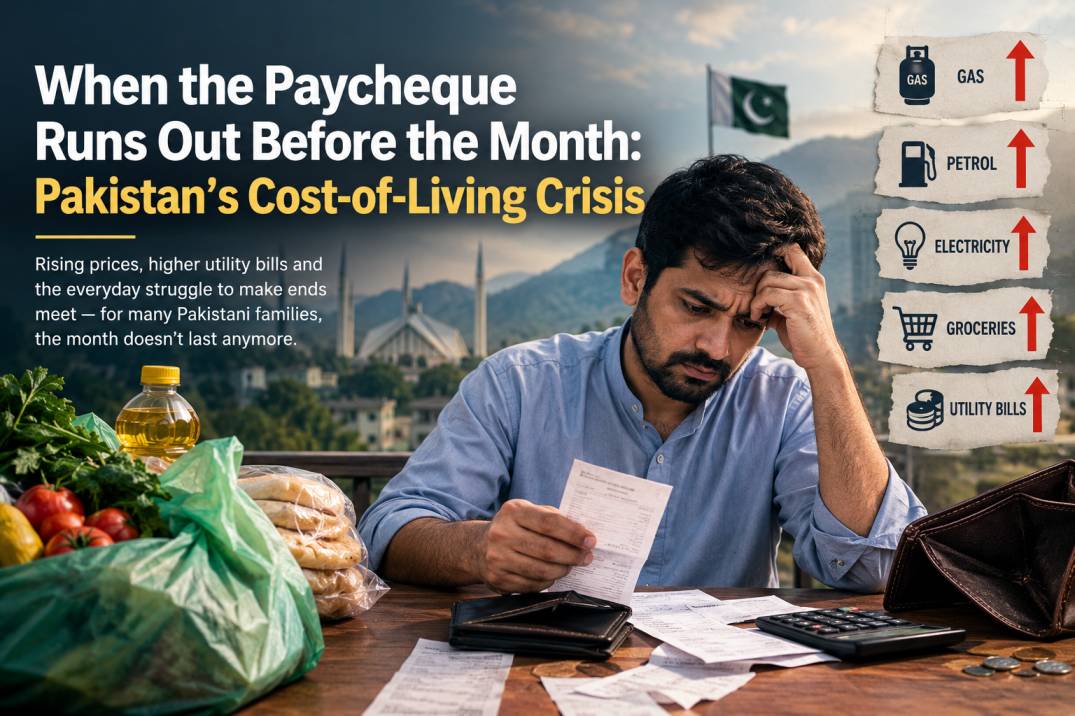
The wider economic figures also show why ordinary Pakistanis are under so much pressure. According to the Pakistan Bureau of Statistics, consumer-price inflation reached 10.3 percent year-on-year in September 2026. Rural inflation was even higher, at 10.5 percent. Prices of several essential items have increased sharply. In rural areas, onion prices were reported to have increased by more than 136 percent year-on-year, while wheat prices rose by more than 37 percent and wheat flour by more than 34 percent. Motor-fuel prices were also significantly higher than a year earlier.
These numbers are not just statistics. They affect real families. They can mean buying less food, travelling fewer kilometres because petrol is too expensive, delaying medical treatment, struggling with school or transport costs, or running a small business with very little profit left at the end of the day.
The poverty situation makes the problem even more serious. The World Bank’s updated international poverty measurements estimate that around 45 percent of Pakistan’s population was living below the $4.20-a-day poverty line in fiscal year 2025. At the lower international threshold of $3 a day, the World Bank’s latest available estimate puts the poverty rate at around 23 percent in 2024. These measures are different from Pakistan’s national poverty line, but they still show how many people are economically vulnerable.
Working people who live on daily or irregular income are especially exposed. The World Bank has noted that a significant share of working poor people are employed in sectors such as construction and logistics. These workers cannot simply stop working when petrol prices rise, roads are blocked or political protests affect transportation. They have to keep working because their families depend on their daily income.
This is where the political crisis becomes an economic problem. When political leaders and powerful institutions remain in conflict for a long time, the effects go beyond television and social media. Roads can be blocked, containers can be placed on highways, transport can be disrupted and businesses can face uncertainty. Recent political developments surrounding the PTI’s march from Khyber Pakhtunkhwa toward Islamabad have again brought these tensions into the national spotlight. Negotiations have faced deadlock, while the federal government has taken measures to restrict the movement of protesters.
The situation creates a simple reality: when the elephants fight, it is the grass that suffers. Political actors may have the resources and influence to deal with a prolonged confrontation, but an ordinary shopkeeper, driver, labourer or delivery rider does not have that luxury. A day without business can mean a day without food. A road closure can mean lost income. Higher petrol prices can mean fewer deliveries, fewer customers and less money for a family.
There is also a serious danger in allowing political conflict to become a permanent part of national life. Governments need stability to implement economic policies. Businesses need predictability to invest. Foreign investors need confidence that policies will not change with every political confrontation. Ordinary citizens need stable prices, jobs and functioning public services. These things are difficult to achieve when political uncertainty continues for a long time.
It is important, however, to separate political opinion from established fact. Different political and institutional actors may be blamed for contributing to instability, but claims that any particular group is deliberately damaging the economy require evidence. What is clear is the result: prolonged political confrontation creates uncertainty, and uncertainty has an economic cost.
Pakistan does not need another cycle in which political forces spend months fighting while the economy continues to suffer. The country needs dialogue, institutional stability, consistent economic policies and decisions that put ordinary citizens at the centre. Political differences are normal in a democracy, but there must also be a point where the national interest comes before political confrontation.
The most important question should not be which political side wins the next confrontation. The real question is how Pakistan can create an environment where a worker can earn enough to support his family, a young person can find a decent job, a small business can operate without fear of sudden disruption, and a middle-class family can plan its monthly expenses without constantly worrying about the next increase in petrol, electricity or food prices.
In the end, the strength of a country is not measured only by the power of its institutions or the size of its political rallies. It is measured by the quality of life of its people. When ordinary citizens are forced to pay the price for political and economic confrontation, the whole country becomes weaker.