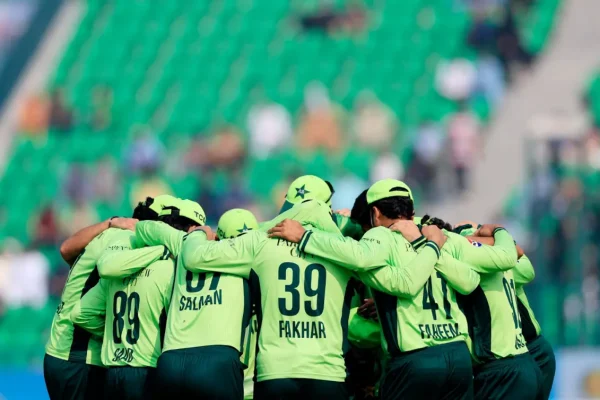
Newlands, Cape Town. Saturday morning, before the first ball.
Marnus Labuschagne crouches on his haunches at the edge of the outfield, waiting to bat. Australia need 288 to win the Test and the series. In the first innings he made a five-ball duck. He has scored 11 Test hundreds, and the last came at Old Trafford in July 2023. For a stretch he was the best batter in the world.
He stands, walks to the middle, and takes guard. He will face three balls. I have not stopped thinking about them.
Nothing moved me, so I wrote nothing. Somebody has to move a writer to write…
Chapter One: Moved
Some months earlier
I write about this game only when it moves me. Good cricket does not count. Good cricket arrives every week and asks nothing of you. Being moved is rarer: a stranger does something you did not know a person could do, in a country you may never see, at an hour when you should be asleep, and for a few minutes you stop being an audience and become a witness. The first Test of the Ashes did that to me, in two days, and I wrote about it. I watched the other four to the last ball. Then the series ended, an English summer came and went, and I could not name you one innings. Nothing moved me, so I wrote nothing. Somebody has to move a writer to write, and the universe, with its usual disregard for my sleep, took the job. My resistance lasted about one session.
Chapter Two: Two Rooms
Same city. Same Saturday night
In the first room, a performer who has done this show 200 times walks onto a stage built for it. The lighting is rehearsed. The song you came for arrives second, exactly where it was promised. The audience paid for that, and it is delivered to the minute. Nobody leaves disappointed and nobody leaves changed. This is entertainment, and I have nothing against it. Its virtue is that it keeps its word.
In the second room, a band walks out with sketches and no plan. In the spring of 1959 Miles Davis brought his musicians into a studio with little more than a handful of scales and melodic outlines, and what they made became the best-selling jazz record of all time. It could have been a mess. The patron in that room knows it could have been a mess, because he has sat through the nights when it was. He pays for the chance to find out.
The two audiences differ in more than taste. The first judges the evening against a promise. The second judges himself against the evening: was I paying enough attention to be there when it happened? Entertainment asks whether you enjoyed it. Art asks whether you were awake.
Test cricket is the second room, stretched to five days.
Chapter Three: Tuesday
Newlands, day one
The series stands at one all. Australia won in Durban by 214, on Matt Renshaw’s 190. South Africa won in Gqeberha by an innings and 31 runs, on Temba Bavuma’s 179. Cape Town decides it.
Pat Cummins wins the toss and chooses to field, citing moisture in the pitch. A captain has made that choice at Newlands only 12 times since 1889. The moisture turns out to be a rumour. By lunch Marques Ackerman and Aiden Markram have South Africa at 140 without loss.
Ackerman is playing his second Test. He makes 95 off 94 balls, with twelve fours and two sixes, four of the fours in a row off Mitchell Starc. Then, five runs short of a hundred, he walks down the pitch to Nathan Lyon, who has waited 15 years for that look on a batter’s face. Stumped. Afterward Ackerman says he lives by the sword and dies by it, and that he left a hundred out there. He does not pretend to be happy about it.
Then Starc.
There is a kind of bowler around whom an afternoon changes ownership. Wasim Akram is one. Shane Warne was another. The scoreboard was never the evidence. The evidence was the batter, who knew first. On Tuesday evening Starc joins them. He has Bedingham caught on 50 and, two balls later, Wiaan Mulder, caught behind for a duck. He takes Rickelton and Jansen in a single over with the new ball, then Coetzee and Rabada. South Africa fall from 203 for 1 to 329 all out. Starc finishes with six for 72, his 20th five-wicket haul, and he is not done.
Mulder walks off with a zero beside his name. Keep that number.
In the last half hour of the day Starc is bowling himself off his feet, and at the start of his 22nd over he reaches down for his right calf and runs in anyway.
Chapter Four: Wednesday
Day two
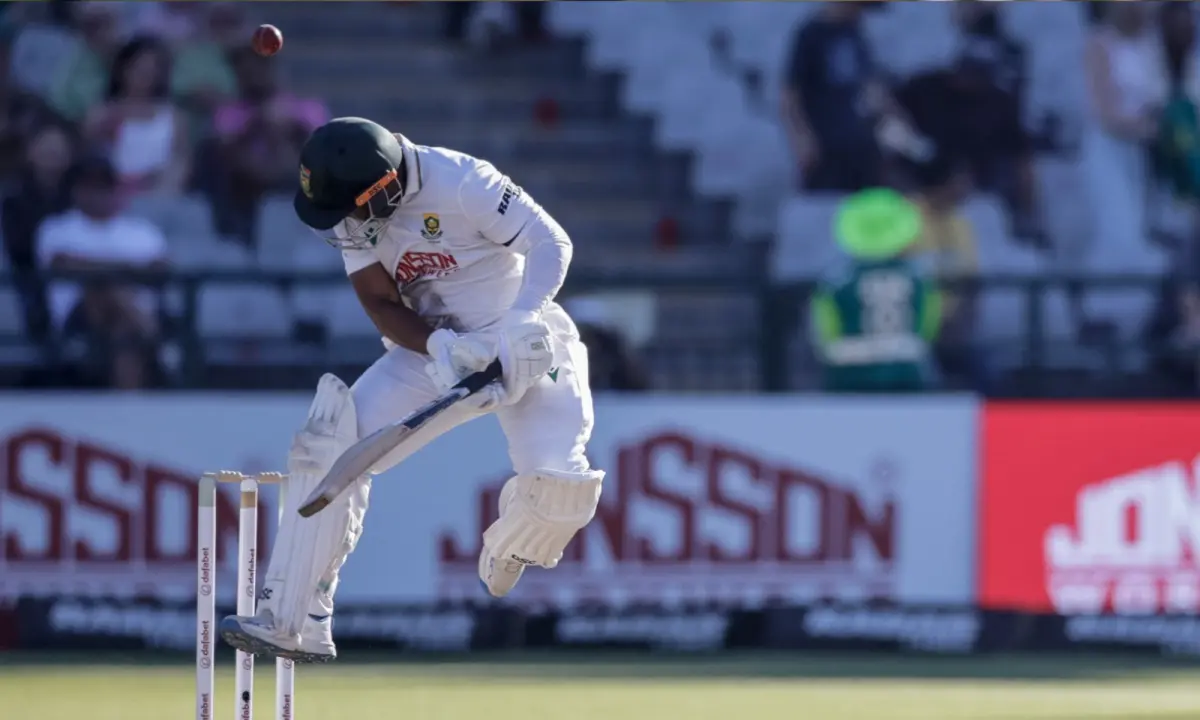
Simon Harmer has Travis Head chopping on for 41. Then Labuschagne, going back to a ball that wanted him forward, edges it to slip, where Aiden Markram takes the catch. Five balls. No runs. He arrived at Newlands needing a score to keep his place, and Australia are 58 for 2.
Tuesday, Mulder: nought. Wednesday, Labuschagne: nought. The match sets them side by side and says nothing.
I am travelling, and the Test starts at an hour that my body, wherever it thinks it is, cannot place. By the second night I have moved two meetings. By the fourth I have moved the rest. I, who could not spare 10 minutes for cricket since the Ashes, now discover that I have five days.
Chapter Five: Friday
Day four
Thursday belongs to Australia. Josh Inglis makes 102 off 135 balls and, with Alex Carey, who makes 80, adds 185. Australia lead by 100. By the close South Africa are four down and 40 ahead, a lead you could carry in one hand.
Friday belongs to two men who have known each other since school. Ryan Rickelton already owns a Test double century and is still the quieter name in a batting order that includes Aiden Markram and Temba Bavuma. Mulder walked off on Tuesday with a zero.
Their plan is a lesson in humility. Rickelton has decided to take a few on the body rather than play the short ball, and he does. He spends 37 balls in the 90s. On 92, Starc bangs one in short, Rickelton shoulders arms, and it thuds into his ribs. He lifts his shirt to show Travis Head, at short leg, the bruise coming up, for confirmation or approval. Head, by all accounts, offers both.
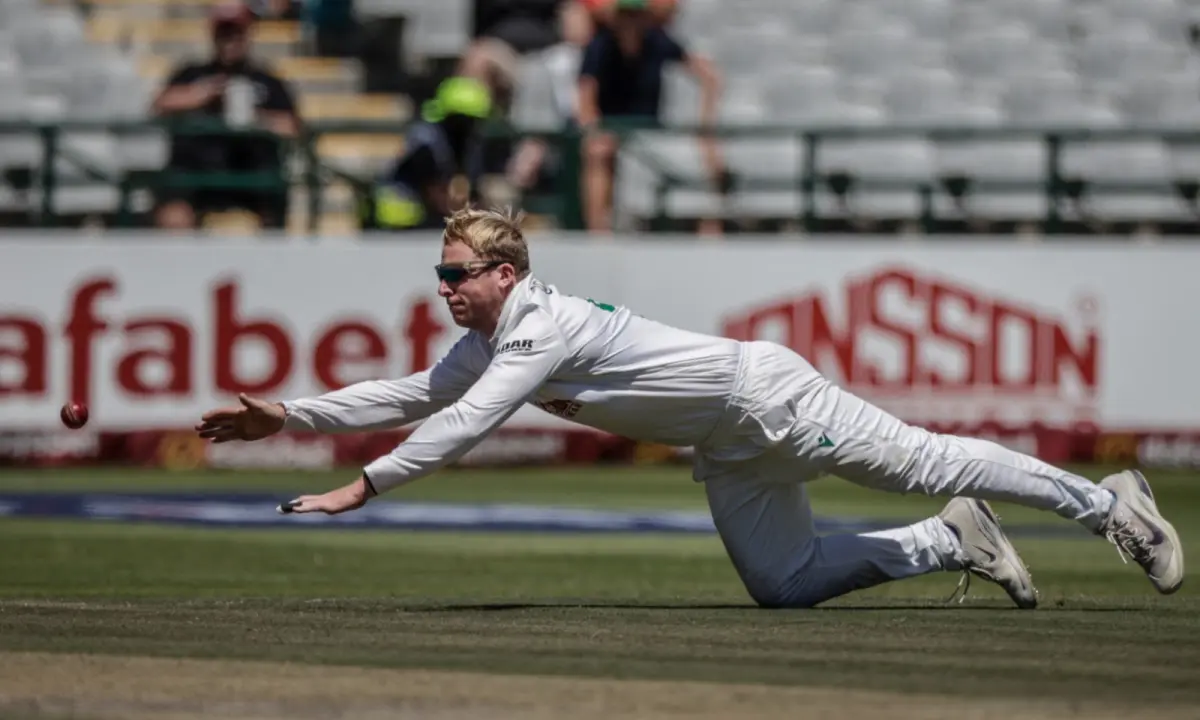
Rickelton reaches his hundred after tea and finishes on 101 off 219 balls. Then Mulder reverse-sweeps, Josh Inglis dives at backward point to cut it off, and Rickelton is run out, the stumps broken by Labuschagne. The stand is worth 154.
It would be easier to say that Mulder rescued South Africa. What he does is odder. He rescues himself, and South Africa happens to be standing next to him. He makes 115 off 221 balls, and on the stroke of stumps he clubs Cummins to deep midwicket, where Mitchell Starc, who has done everything else on this ground for three days, takes the catch. South Africa have 387. Australia need 288.
Wiaan Mulder. Tuesday: 0. Friday: 115.
The same 387 would have been a decent total on Tuesday. On Friday, on a pitch that has begun to come apart, from a side that was four down the night before, it is a verdict.
Nothing else in sport asks you to be brave slowly, and then makes you wait through the night to learn whether it counted.
Chapter Six: Saturday Morning
Day five
Kagiso Rabada has the new ball. Travis Head takes a single off the second delivery. The third is down the leg side, Matt Renshaw, the hero of Durban, is strangled, and Rickelton takes the catch behind the stumps. A golden duck. Labuschagne gets up off his haunches and walks out.
David Warner had predicted that the day would end with Labuschagne a 100 not out and Australia winning with seven wickets down.
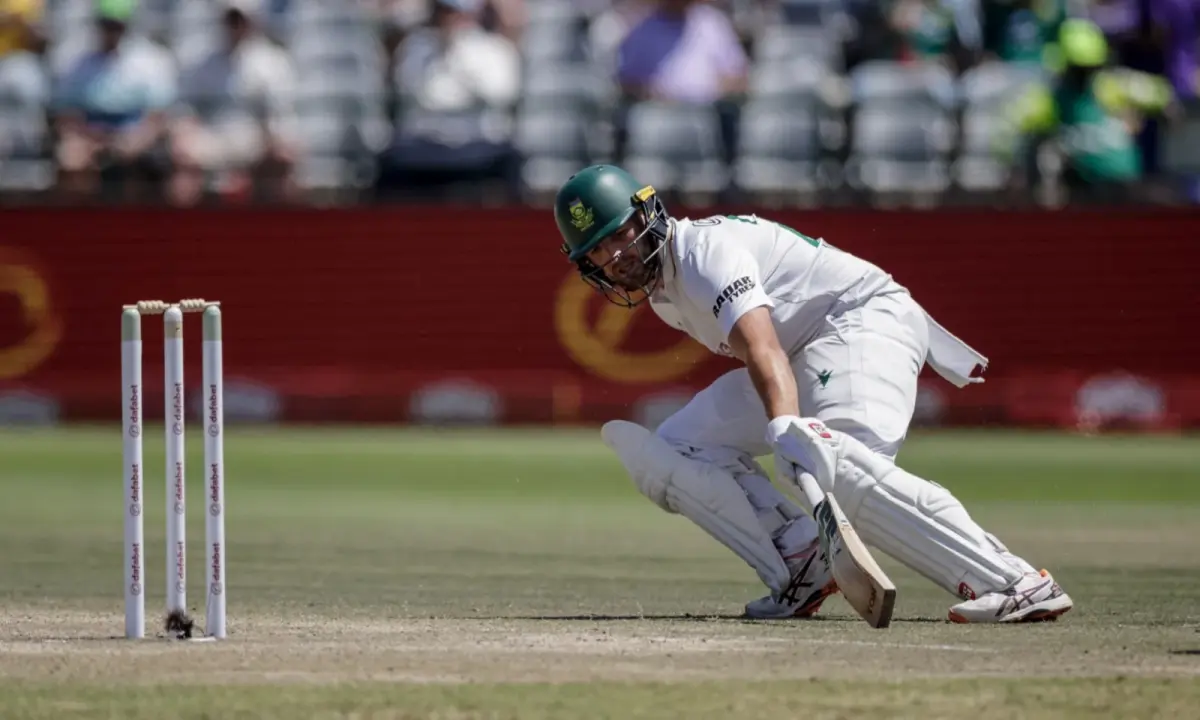
The first ball Marnus faces runs off the leading edge, past gully, for four. Two balls later Rabada bowls one that nips back. Labuschagne, playing no shot, is hit on the back pad in front of the stumps. Richard Kettleborough raises his finger. Labuschagne reviews. The replay shows the ball clipping the off bail, which makes it umpire’s call, and the original decision stands. Out for four. 5-2.
Umpire’s call is a rule written for doubt. If the ball is only clipping the stump, the umpire’s original decision stands, whatever it was. Had Kettleborough shaken his head, the very same replay would have left Labuschagne standing where he was.
I have thought about the innings that follows that headshake more than I have thought about most of the ones that were played. It starts the way his best always have, quietly: a leave, a leave, a punch through cover that sounds like a door closing on a bad year.
By lunch he is on 30, and Australia, three down, are breathing again. By tea the drought is over. By the close it is a hundred, and Warner’s forecast, which sounded absurd that morning, looks like prophecy. It never happened. I would swear I watched it.
This is what faith costs in Test cricket, and what luck pays out. Everything Labuschagne has done since he was a boy, the dawn nets, the leaves, the belief, is weighed in the end against a sliver of bail and one man’s reading of it.
Luck is not the opposite of skill in this game. It is the second signature on the contract. A batter can prepare for everything except the sliver, and the sliver is where Test cricket keeps its mystery.
I wrote once about Virat Kohli and the fifth stump, that line outside off where a ball extends an invitation and a great batter accepts it against his own training.
Kohli was beaten by the ball he should have left. Labuschagne was beaten by the ball he left. The craft is the same and so is the verdict: the sport does not care how well you prepared. I support South Africa. I have rarely been so sorry to see them succeed.
By the end of the day Nathan Lyon, at number 10, will have made 33 not out, the top score of the innings, 29 more than a man who was once the best batter in the world.
Labuschagne has the application, the talent, the faith and the hours. All of it is still there. And one morning, for no reason anyone can name, it leaves, the way a word does when you say it too many times and it becomes a sound. He may have played his last Test for Australia in that over. I hope not.
Marnus Labuschagne. Wednesday: 0. Saturday: 4.
Head scores the way a vending machine dispenses: promptly, correctly, and without looking at you. He hits a few boundaries, then edges Rabada to Marco Jansen at gully. 14. It is Rabada’s 350th Test wicket, reached in 13,808 balls, faster than any bowler in history and 911 balls quicker than Dale Steyn. I am alarmed by how much I enjoy it.
Simon Harmer comes on in the 12th over, and the morning comes apart. Inglis is run out for four after Cameron Green sets off for a run that was never on, and Ackerman, who left a hundred on the field on Tuesday, takes a wicket back from silly point.
Alex Carey reverse-sweeps and top-edges to Jansen. Cooper Connolly is caught behind for nought. Starc, promoted to number eight to deal with the footmarks, survives 25 balls without scoring and is caught at bat-pad off the last ball before lunch, the longest duck of his Test career. At lunch Australia are 60 for 7. Harmer has 3-5 from eight overs.
Chapter Seven: Saturday Afternoon
Day five, after lunch.
After lunch the match stops moving, and it becomes the best thing in it. Australia score two runs in an hour. There is a stretch of 78 balls without a run. Green is sheltered from Harmer’s off breaks, and Cummins, who has come out beside him with a plan to bat time instead of runs, defends everything that comes.
Six fielders crouch around the bat. It is a standoff in which the only weapon anyone holds is patience. When the first run finally comes, the Newlands crowd cheers it, ironically and at length. Then Harmer changes ends, drags one through Green’s gate, and Green is bowled for 27. 62-8.
And then two men who have no business being dangerous become dangerous. Cummins faces 90 balls and scores 11 runs, and I have never been prouder of a ratio. Nathan Lyon, who bowled 44 overs in South Africa’s second innings, bats as though that were a warm-up. They add 45. The result was settled hours ago. They know it, the crowd knows it, and everyone awake across the world knows it. They stay anyway.
This is the strange, magnificent design of the thing. A Test match asks the athlete to bring his best courage and his best stamina not for an hour but for five days. Then, on the fifth afternoon, when the specialists have failed, it hands the match to the people who were hired to do something else.
A fast bowler walks out and decides to become a wall. A spinner decides to become a clock. Nothing they do will change the result, and that is exactly why it matters. A win is a fact. This is a gift.
When a man spends 90 balls on something that cannot be won, the scoreboard stops being the point, and the rest of us find out what valour looks like once the reward has been taken away.
Just before tea Harmer traps Cummins lbw. Cummins reviews. The ball is clipping the off bail, and the umpire’s call stands. It is the second time that day those words have decided a man’s fate, and both times the call goes South Africa’s way.
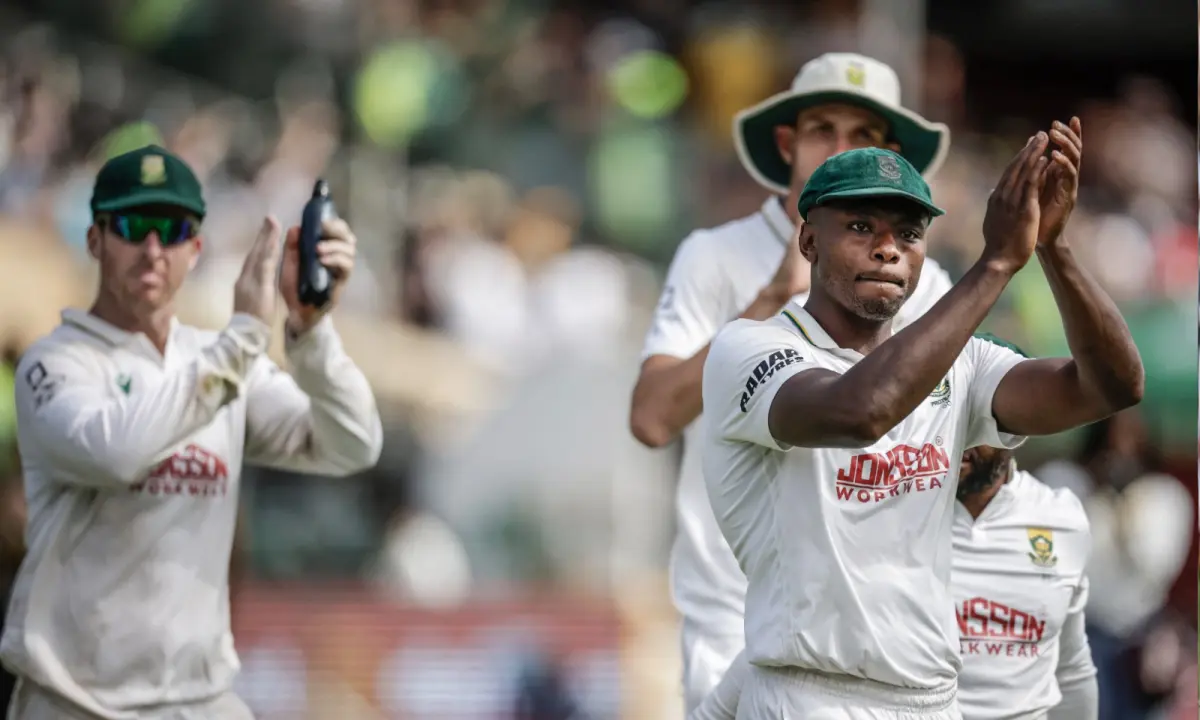
Every great Test victory owes something to luck. Then, with the first ball of his 22nd over, Harmer bowls Josh Hazlewood. Australia are all out for 111. South Africa win by 176.
Harmer finishes with 6 for 16 from 21.1 overs, 14 of them maidens, and 10 wickets in the match, the first time he has done that in a Test. He is 37. He bowled through a torn nail on Thursday. He spent years with Essex in English county cricket, was recalled, and on a Saturday in Cape Town takes apart the top-ranked Test side in the world.

Chapter Eight: Everyone Awake
Some hours later.
A machine can give you the result of this Test in one line. It will be correct, and it will take four seconds. Australia 111, South Africa by 176, the series 2-1.
It cannot tell you what it was like to be awake for it.
We are living through a strange subtraction. Answers arrive before the questions are finished. Summaries sit above the thing they summarise. Almost everything that once cost an afternoon now costs a tap, and the cost was never the enemy.
The cost was where the meaning was kept. A letter mattered because it took a week. A song mattered because you had to wait for the radio to play it. Take away the wait and you take away the room where the feeling lived.
Test cricket is the last large public thing built so that nothing can be skipped. You cannot fast-forward the 90th ball. You cannot be told how it felt. The only way to know is to stay, and staying is the whole price of admission, paid in the oldest currency we have: hours, spent in company.
Somewhere in that fifth afternoon, in a time zone that had no business being awake, a stranger was watching Cummins defend a ball for a reason no efficiency expert would accept. Most of us had no stake in the result. We were there because the sport asks a very human question, which is whether you will stay.
That is human-centred design. The game is built to the scale of a person. It takes five days because a person needs five days to become who he will be on the fifth. It lets a man fail in public and return in the second innings.
It makes 10 team-mates watch each member be afraid, one at a time, and know exactly what it costs. And in an age that can produce the likeness of almost anything, it offers the one thing that cannot be produced: a reason to stay up with strangers for something that may not end well, and to be glad you did.
Chapter Nine: Thank You
16 months earlier, and also now.
In June 2025 I sat at Lord’s through Rabada’s third-innings spell of the World Test Championship final and watched Bavuma lift the mace. It was South Africa’s first global title in 27 years, and it was the day and the occasion that moved me most that year.
That same summer I wrote about a five-Test series and called the piece Five Shades of Flat. Now the same South Africans, under Bavuma, who lost the first Test of this series and won the next two, are the number one Test side in the world for the first time since January 2016.
Thank you Test Cricket..
Thank you For lunch, to begin with, which stops a Test match at its most dangerous moment so that twenty-two men can have a civilized meal.
For tea, the second truce of the day.
For the maiden over, the only unit of achievement in sport defined by nothing happening.
For the duck, a zero named after a bird, so that even the worst day a batter can have arrives with a little feathered mercy.
For a game in which a man can score eleven in ninety balls and be remembered as a hero, and another can score four in three balls and be mourned.
For umpire’s call, in which a machine admits it is not sure.
For the nightwatchman, the bad light, the follow-on, the draw that feels like a victory and the victory that feels like a funeral.
We could not have invented you. No committee would have approved you. You take five days to say what other sports say in two hours, and you say it better, because you leave room for people to be wrong in public and the time for them to come back.
I closed the laptop. The room was quiet, and the quiet was full, the way a house is after the guests have gone. Whether Marnus Labuschagne walks out again for Australia is the one thing this match left unanswered. Test cricket will answer in its own time. I intend to be awake when it does.
Yours, awake.. I suspect he is too.
The post Dear Test cricket, I stayed up appeared first on Dawn – Home.