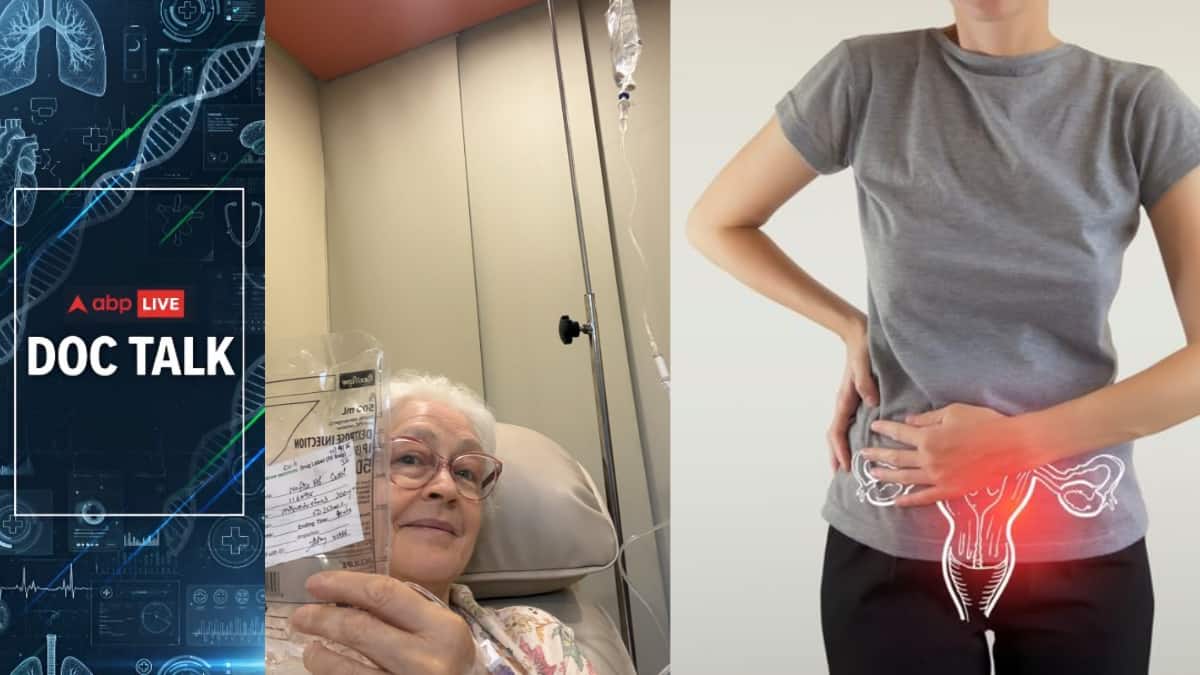
<p><span style="font-weight: 400;">Actor Nafisa Ali has shared an update on her ongoing cancer treatment, revealing that her medical protocol has changed after scans showed new cancer deposits on the surface of her liver. The 69-year-old actor, who has been living with ovarian and peritoneal cancer, said she has now started targeted therapy. Her update highlights how cancer treatment can change when scans indicate disease progression. It also brings attention to peritoneal cancer, ovarian cancer recurrence, and the meaning of deposits found on the liver’s outer surface. While every patient’s condition is different, such developments require careful evaluation by an oncology team.</span></p>
<h2><strong>Nafisa Ali’s Latest Health Update</strong></h2>
<p><span style="font-weight: 400;">Sharing a photograph from a hospital bed, Nafisa wrote on Instagram, “My treatment protocol has changed, and now I have been put on a Targeted Therapy… fighting the good fight. Thank you for always keeping my support energy strong.” </span><span style="font-weight: 400;">Explaining her scan results, she added, “In very simple terms, the PET/CT suggests that the ovarian/peritoneal cancer has progressed, with new deposits on the surface of the liver.”</span></p>
<p><span style="font-weight: 400;">A PET/CT scan combines metabolic and anatomical imaging. It helps doctors identify areas that may show active cancer and assess whether the disease has spread or returned. However, scan findings must be interpreted alongside the patient’s symptoms, medical history, and other investigations.</span></p>
<p><span style="font-weight: 400;">ALSO READ | </span><a href="https://news.abplive.com/health/doc-talk-post-festive-detox-why-crash-diets-aren-t-the-answer-after-overeating-1866550" target="_blank" rel="noopener"><strong>Doc Talk | Post-Festive Detox: Why Crash Diets Aren’t The Answer After Overeating</strong></a></p>
<h2><strong>What Do Liver Surface Deposits Mean?</strong></h2>
<p><span style="font-weight: 400;">The liver is covered by a thin outer layer called the capsule. Cancer cells from nearby or abdominal areas may spread through the peritoneum, the lining of the abdominal cavity, and form deposits on the surface of organs, including the liver.</span></p>
<p><span style="font-weight: 400;">This is different from cancer growing inside the liver tissue, although both findings need specialist assessment. In ovarian and peritoneal cancers, disease spread within the abdomen can involve the peritoneal lining, bowel surfaces, abdominal organs or the liver capsule. </span><span style="font-weight: 400;">The term “progression” generally means that cancer has increased, spread or developed new areas despite earlier treatment. It does not, by itself, indicate how quickly the disease may advance or determine an individual’s prognosis.</span></p>
<p><span style="font-weight: 400;">ALSO READ | </span><a href="https://news.abplive.com/health/h1n1-contagious-how-swine-flu-spreads-symptoms-prevention-1866168" target="_blank" rel="noopener"><strong>Doc Talk | How Contagious Is H1N1? Know How The Flu Spreads</strong></a></p>
<h2><strong>What Is Targeted Therapy?</strong></h2>
<p><span style="font-weight: 400;">Targeted therapy refers to medicines designed to act on specific molecules, proteins or biological pathways that help cancer cells grow and survive. Depending on the cancer type and test results, these medicines may block cancer-related signals or interfere with specific changes inside tumour cells.</span></p>
<p><span style="font-weight: 400;">Targeted treatment is not suitable for every patient. Doctors may recommend molecular or genetic testing to identify whether a tumour carries a change that can be treated with a particular medicine. The choice also depends on previous treatments, overall health, disease location and possible side effects.</span></p>
<p><span style="font-weight: 400;">Nafisa was diagnosed with stage 3 peritoneal and ovarian cancer in 2018. She has previously spoken about entering remission and continuing treatment. Her latest update underlines the importance of regular monitoring and personalised care in cancers that may recur or progress.</span></p>
<p> </p>
The post Doc Talk | Nafisa Ali’s Ovarian Cancer Recurrence: What Peritoneal Cancer And Liver Surface Deposits Mean appeared first on Doc Talk | How Contagious Is H1N1? Know How The Flu Spreads.