The government announced on Monday that oil refineries would bear a burden of approximately Rs15 billion each month, which would allow petrol to be sold Rs15 cheaper than what it was in the global market amid the US-Israeli war on Iran.
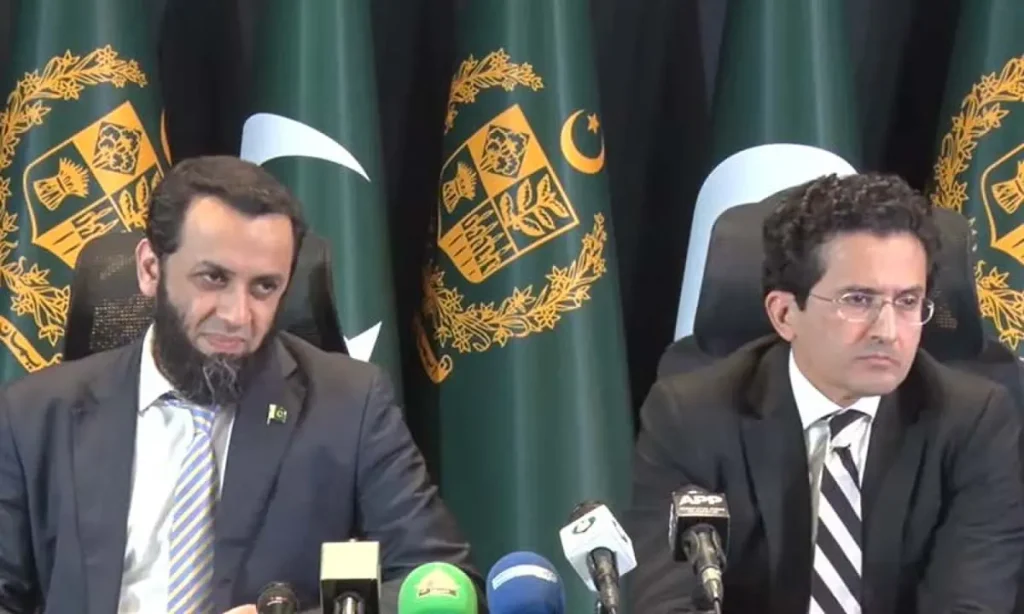
The announcement came at a press conference in Islamabad addressed by Petroleum Minister Ali Pervaiz Malik and Information Minister Attaullah Tarar.
Addressing the conference, Malik said that the premier had made efforts to meet with refineries and consult with them regarding interventions to ensure that people got the cheapest petrol amid impending steep fuel price increases, including an increase of about Rs15 that would have taken effect on Friday.
“I am grateful to all the refineries that saw the public is in difficulty and with the government’s help … increased their throughput,” the minister said, adding that these refineries had made profits from this throughput in the last three months.
“They were requested to take a step to support the public during this difficult time, and I am glad that they listened to us … the Rs15 increase that was coming in the petrol prices on Friday, they helped the government with that and because of that we were able to maintain the price.”
He added that more improvement would be seen by the public, expressing his gratitude to the refineries for standing with the government to provide assistance to the public during a time that had caused everyone difficulties — even the government as it struggled to procure oil at increasing prices.
As a result of this step, he highlighted, a load of approximately Rs15 billion a month would be borne by these refineries, allowing petrol to be sold at a rate Rs15 per litre cheaper than what it would be in the international market.
He expressed his hope that the crisis in the Middle East would soon move towards a peace agreement and that the government could advance with its purposes of “taking the system towards improvement, deregulation and refinery upgrades”.
“The government doesn’t want to be cruel to anyone,” Malik stressed, saying that it intended to take actions “with consultations, keeping the public’s interests in mind, in a fair way”.
He added that before the crisis, the premium of the refineries was $5 per barrel, and even today a $20 limit had been established. He further said that the government would have to step in and protect the public in case of further difficulties.
Tarar also addressed the conference, noting that the premier’s vision “from the first day” had been to put as little burden on the country as possible.
He said that even though the situation in the Middle East had affected every economy, including that of Pakistan, “our macroeconomic indicators have remained largely stable — Pakistan’s economy hasn’t taken as much of a hit as other countries”.
Regarding Friday’s situation, when petrol prices were increasing in the international market, he said that PM Shehbaz had directed refineries to absorb the price hike in order to prevent the Rs15 increase.
“During this difficult time … I think this is a great effort, as a result of which the public has been saved from this difficulty,” the information minister said.
He also discussed the fuel subsidy scheme announced by the premier on Sept 13, saying, “If you told me two months ago that there would be a scheme in which, upon SMS registration, motorcycle users get a weekly concession of Rs500 on petrol, and 800cc car users, every 10 days, get 10 litres of petrol for Rs100 less per litre, then I would have told you that it’s probably not possible to implement such a scheme.”
He praised PM Shehbaz’s “will power, intent and empathy for the public” that served as the foundation for the scheme.
Tarar highlighted that the number of unique users who had registered for the scheme had now crossed 15 million. He said that about Rs27bn had so far been allocated towards this relief and highlighted its success.
“This is a unique relief that is not available in the rest of the world,” he said, referring to both the fuel subsidy scheme and the steps taken by the government to prevent the increase in prices on Friday.
Answering questions, Malik said that he was the “biggest advocate for deregulation” and for bringing competition into sectors, seeing it as the way to protect people’s welfare and deliver good service. However, he pointed out, “Have you seen any incident in the last 50 years that has been happening in the last six to eight months? What rules-based order do you want to adopt in the middle of this disaster?”
He stressed that once the crisis in the region ended, the government would make efforts to return to deregulation; however, currently the focus was on public relief.
The two ministers also stressed that there was no fuel shortage and that the country’s needs were being met even during difficult times. Malik said that November’s supply was fully covered, while decisions would be taken on supplies for the winter months of December and January and the prime minister had directed any necessary steps to be taken to ensure supplies.
The government continues to levy Rs114 per litre in taxes and duties on petrol and Rs100 per litre on diesel.
The price of HSD has come down from a peak of Rs520.35 recorded on April 3. Its price had started rising from Rs281 per litre after the US-Iran war broke out on Feb 28.
The petrol price had peaked at Rs458.41 on April 3 after beginning its upward trajectory from Rs266 in the first week of March.
Meanwhile, the government has reintroduced a raft of austerity measures in response to rising fuel prices amid the conflict. Under these measures, markets are required to close by 9pm, and fuel allocations for official vehicles have been cut by 50 per cent for three months.
As of July, fuel prices are now fixed on a daily basis due to fluctuations in international market prices.
The post Govt enlists oil refineries to shield citizens from global price hikes appeared first on Dawn – Home.