

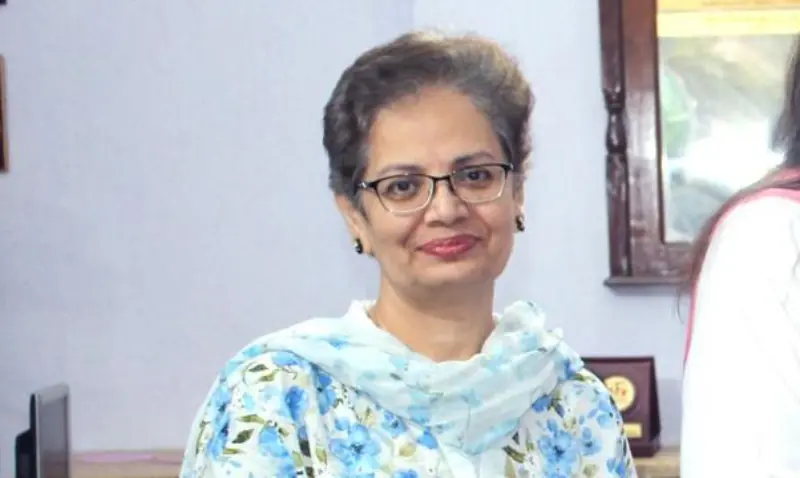
KARACHI: Karachi Police Surgeon Dr Summaiya Syed on Monday said she faced “threats” after disputing the findings of the first post-mortem in the murder case of young businessman Mir Raza Ali.
She made the comments during her testimony before a judicial commission tasked with probing the circumstances of and possible negligence around the murder case. The one-member panel, headed by Sindh High Court’s Justice Omar Sial, has been holding regular hearings.
The 25-year-old victim’s family is convinced that their son was tortured and murdered, and has accused police of trying to bury the facts, as law enforcers initially tried to build the case around the possibility of suicide.
Appearing before the commission on Monday, Dr Syed said she put her career at stake for this case.
“I was followed by a motorcycle for two days. I was also given threats,” she said.
The murder case has been mired in controversy, particularly after Dr Syed pointed out flaws in the findings of Ali’s first autopsy.
The case goes back to July 29, when Ali’s body was found in Karachi’s Gulistan-i-Jauhar with a gunshot wound, a day after he went missing.
In early August, Dr Syed pointed out inconsistencies between the first medico-legal report prepared by MLO Dr Osama Sheikh and the available photographs. Following that, Ali’s body was exhumed on his family’s request and a second post-mortem was conducted.
That examination — conducted by a medical board that Dr Syed was a part of — revealed that Ali sustained multiple injuries before his death and ruled out suicide.
During Monday’s proceedings, Dr Syed said that when she approached a police officer to point out loopholes in the first autopsy report, she was told that the police would be lenient during “interrogation” if she did not oppose the findings hinting at suicide.
However, she was not called for an interrogation, the police surgeon added.
Dr Syed said a “public campaign” was being waged against her and her family members’ information was being shared online, adding that she had filed a complaint before the National Cyber Crime Investigation Agency (NCCIA).
She further said that Ali’s murder case was a “test case” for her.
“I would do the same if I have to in another case,” she declared.
At this, Justice Sial asked the police surgeon whether she wanted Rangers personnel deployed for her security, which she refused.
Justice Sial ordered the chief minister’s focal person to apprise CM Murad Ali Shah of the police surgeon’s statements.
The written order for Monday’s hearing, seen by Dawn, narrated that when the commission asked Dr Syed “whether she was targeted for intimidation after she resisted the findings of the first post-mortem report Dr Osama submitted in the case, she said she had been”.
“She narrated one incident of intimidation by two motorcyclists when she was going home, and the threatening manner in which she was treated by DIG Amir Farooqi, who also attempted to influence her findings. She, however, declined police security,” the order read.
The commission requested the Home Department’s additional secretary to bring Dr Syed’s complaints to the notice of CM Murad and Home Minister Ziaul Hassan Lanjar. The panel also requested the Sindh police chief to “ensure Dr Syed’s safety”.
Directing that a copy of the order be sent to DIG Farooqi and the police chief, Justice Sial said the DIG “will be given an opportunity to address the situation when he appears before the commission”.
“Dr Syed has also complained that a person named Imtiaz Chandio is defaming her and disseminating her family and residential address details to the public. She has put on record the requisite snapshots/details,” the order further said, adding that a complaint has been lodged with the NCCIA over it.
“As an important witness in this case, she appears to have been targeted for intimidation; the NCCIA is requested to look into the matter expeditiously,” Justice Sial wrote.
The order also noted the complaints of Ali’s business partner Muhammad Ahmed Bhardey that he “had much more to tell the Commission than he was ‘allowed’ to”. Recalling that Bhardey was given two hours and 15 minutes, the judge said he was permitted to add to his earlier statement.
The judge also ordered Bhardey to explain the conduct of his legal counsel who “attempted to scandalise the commission and its proceedings in the interviews aired”. The business partner was summoned for further statement on September 17 (Thursday).
Advocate Jibran Nasir, the counsel representing the victim’s family, “filed a voluntary disclosure, which has been taken on record”, according to the order. “I have reviewed it and found no conflict,” Justice Sial noted.
Investigating Officer (IO) Siraj Lashari filed a “report regarding his visit to Bykea and the landlord”, the order said, adding that the IO’s request for additional time to submit a final report was approved.
The commission summoned Crime Investigation Agency’s (CIA) Inspector Muhammad Ali for the next hearing at 11am on Tuesday, along with the “record of CIA regarding incoming and outgoing letters”.
The panel was informed that Muhammad Ahsan Anees Shamsi, who has a 30 per cent partnership in the victim’s eatery Wafflix and was issued a notice earlier, was in Russia and could be reached on WhatsApp/Zoom.
Justice Sial also directed that Usman Buzai, whose name Bhardey had disclosed before the commission in connection with Ali’s business, be asked to appear via video link, or upon his return from Gujranwala.
Acid burns
At the outset of today’s hearing, Dr Syed detailed the timeline of her communication in early August with law enforcers, including Senior Superintendent of Police (SSP) Samiullah Soomro, wherein she suggested exhumation of Ali’s body for the second autopsy.
Dr Syed noted that members of a medical board are chosen based on their expertise. She added that 263 photographs were taken during Ali’s second post-mortem examination.
Upon the judge asking whether the Sindh Medicolegal Act 2023 has been implemented, the police surgeon said the legislation was in force, but the rules had not been notified.
Dr Syed then highlighted that the majority of the medical board initially formed for the second postmortem was changed. She added that Ali’s family had voiced their lack of confidence in the new team, which delayed the process until the initial medical team was reinstated.
Asked why the medical board was suddenly reconstituted, Dr Syed said she was not aware of the reasons.
During the hearing, the police surgeon also gave a presentation of pictures when asked about the exhumation process. The commission requested the victim’s family to leave the room, noting that some photographs “could be unbearable for them”.
Dr Syed informed the commission that there was an injury mark on Ali’s head, a mark on the back of his head from being hit by a hard object, and his nose bone was broken. She noted that these injuries occurred before Ali’s death.
She pointed out that samples for checking gunshot residue were not taken in the first postmortem, adding that it also stated the wrong size of the bullet injuries.
The police surgeon observed that the decomposition of the victim’s face was not similar to that of other body parts. She added that the bullet caused fractures to Ali’s ribs, as well as damaged his lungs and heart.
The deceased man’s body also had marks of acid burns, with a chemical examination report confirming the presence of acid, Dr Syed said.
Pointing out issues with the first autopsy, she said Ali’s hands and feet had signs of burns from a chemical, but the initial report had termed them a sign of decomposition.
Stating that four skin specialists had also been consulted, Dr Syed said hydrochloric acid (HCl) turns polyester into carbon and carbonisation was found on Ali’s shirt. She added that HCl was found from the shirt as well.
She further said that the amount of blood where Ali’s body was found was less in comparison to the average four to five litres that a human body contains, especially considering the injury to his heart.
When the proceedings resumed after a short break, Dr Syed informed the commission that the burns present on Ali’s body were likely not from gastric acid, which has a mild effect.
Asked whether the marks on the body could indicate burns from a chemical, the police surgeon said each case was different. She stressed that she carefully reviewed the photographs after the controversy of the first autopsy.
Dr Syed said marks resembling those caused by concentrated hydrochloric acid were seen on the victim’s hands.
She recalled that samples collected by MLO Sheikh, including those from Ali’s stomach and blood in his heart, were sent to Karachi University for testing by Shabbir Leghari.
At one point during the hearing, Ali’s father Mir Hussain said he was told that battery acid had been used where his son’s body was found. Dr Syed then said that she was informed it was HCl.
Presence of anaesthesia
“I have seen a case of chemical torture for the first time in my life,” Dr Syed told the commission.
The police surgeon said that Ali probably “remained alive for 12 hours after going missing”, based on the half-life of the anaesthesia found in the blood sample from his heart.
She asked whether Ali had received any medical treatment in the seven days before his death, to which his family replied in the negative.
The doctor explained that local anaesthesia has an immediate effect if injected directly into the vein, and it takes between two and nine hours for its effect to wear off.
She contended that MLO Sheikh provided incorrect information about anaesthesia’s half-life, adding that the initial autopsy stated the time of death as 20-22 hours before the postmortem.
“This much can be said that when Mir Raza was shot, anaesthesia was present in his body,” the police surgeon declared.
The commission observed that anaesthesia should ideally not be available easily without a prescription. “Usually, this is not the case,” Dr Syed responded.
When the commission enquired about the terms of reference (ToRs) of the medical board, she said it was tasked with investigating the questions raised regarding the first autopsy.
The commission noted that the police surgeon had provided detailed answers to its questions.
Ferozabad SHO questioned about FIR registration
After a break, the judicial panel summoned Station House Officer (SHO) Adeel Afzal of Ferozabad police station, where the case was initially registered, to record his statement.
SHO Afzal was asked if he had ever been posted in the Counter-Terrorism Department (CTD) or the Anti-Violent Crime Cell (AVCC), to which he replied that he had served in the AVCC.
“I have not even slapped anyone till today,” he said when asked how many individuals have been killed in extrajudicial encounters. The SHO informed the panel that he has been in police service since 2002.
“You told the family twice that you shoot bullets. How many extrajudicial murders have you committed so far?” the judge asked.
To this, SHO Afzal replied that he has never been involved in any extrajudicial murder, nor did he say any such thing to the family.
The commission then enquired what the SHO does if a complaint regarding a missing person comes, to which he said that a case is registered if it is a cognisable offence.
Asked why a case was not registered as per the family’s complaint, SHO Afzal replied that the duty officer had spoken to Ali’s father.
The commission wondered whether a first information report (FIR) could be registered without the SHO’s permission and urged Afzal not to put the responsibility on his subordinates.
The panel asked the police officer who called them on “the 28th” after which the FIR was registered, to which SHO Afzal replied that he did not get any call.
“Why would Mir Raza’s father lie? You told him that boys sometimes get upset and leave,” the judge said.
The father said he was told by the police that an FIR is not registered until 24 hours have passed since a person’s whereabouts were unknown.
Asked who said this, Hussain replied that Azeem and Furqan at the Ferozabad police station made the remarks about youngsters getting upset and leaving home.
The father recalled that when he went to the police station in the afternoon of the day Ali went missing, the SHO was in the “rest room”. “We told him that you must have gotten a call; we have to file a complaint,” he said.
At one point during the proceedings, the judge expressed his dismay at the Sindh government’s focal person over the roznamcha (daily log) not being presented.
The commission stressed that only original documents be provided to it. It asked why the original daily log was not presented.
At the SHO saying that the investigation was handed to Arshad Javed of the Special Investigation Unit (SIU), the commission asked Afzal on what basis he was still involved in the probe and checking CCTV footage.
The commission enquired whether police protocols allow an SHO to probe the case after an IO has been assigned, to which Afzal said Section 156 of the Code of Criminal Procedure (CrPC) allowed it.
“You are the police, you are the area’s king. [Therefore,] you have a major role in ruining the case,” Justice Sial remarked.
The judge asked SHO Afzal if someone had pressured him or offered him any benefits, to which the police officer replied that he neither got any threats nor was offered any benefits.
When the SHO recalled that the police were given a mobile phone from Sajid and Sajjad on University Road, Advocate Nasir highlighted that the CCTV footage showed Ali throwing the mobile phone but did not show the two men picking it up.
SHO Afzal then concluded his testimony before the judicial commission.
The post Mir Raza murder case: Police surgeon says she received 'threats' after disputing first autopsy findings appeared first on Dawn – Home.