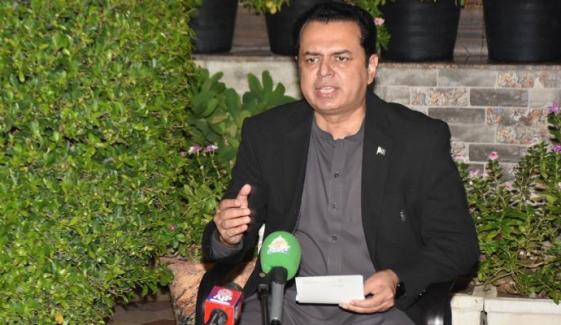
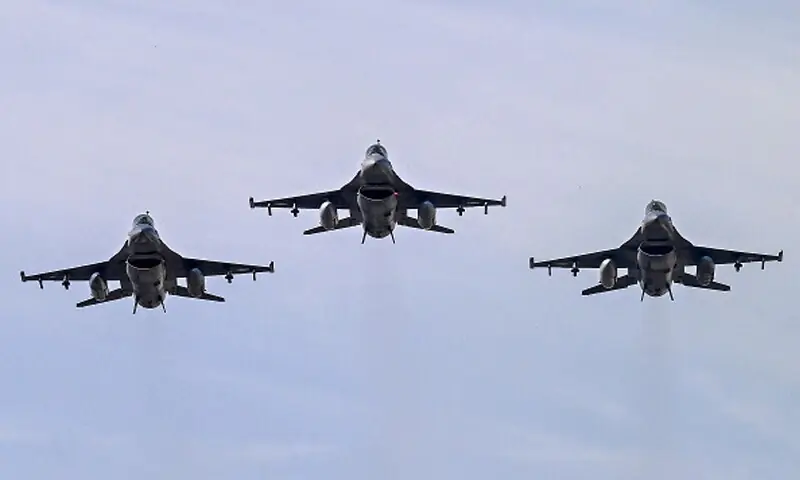
Pakistan has conducted precision aerial and drone strikes in 10 locations across Afghanistan in retaliation for drones launched from the neighbouring country a day earlier, Information Minister Attaullah Tarar said in the early hours of Thursday.
“In exercise of its sovereign right to self-defence, Pakistan conducted precision aerial and drone strikes against 10 locations in Afghanistan used for launching and storing these drones,” Tarar wrote in a post on social media platform X.
He added that the strikes were “deliberate, precise, calibrated and proportionate, and strictly limited to identified military objectives directly linked to the attempted attacks against Pakistan”.
In the post, Tarar condemned Wednesday’s “deliberate and unlawful” drone incursion, calling it a “blatant violation of Pakistan’s sovereignty and territorial integrity”.
He held the drone attacks were a “grave and unacceptable act of aggression”.
The information minister said Pakistan had conveyed its concerns to the Afghan Taliban over the terrorist elements emanating from Afghan soil and the presence of terrorist sanctuaries.
However, he noted that rather than dismantling the terrorist networks and taking action against them, the Afghan Taliban chose to “escalate the situation through hostile drone operations against Pakistan”.
He said that in Wednesday’s attack, Pakistan’s air defence systems had “detected, tracked and neutralised all intruding platforms before they could reach any of their intended targets, comprehensively thwarting the attempted attack”.
Tarar held that Pakistan will “neither accept nor tolerate” attacks from Afghan territory — whether by terrorist groups or the Afghan Taliban regime itself.
He warned against violation of Pakistan’s sovereignty, vowing that it will be met with “an immediate and decisive response”.
The minister further held that: “Any threats, denials or attempts to deflect responsibility by [the] Afghan Taliban will neither alter the facts nor constrain Pakistan’s inherent right to defend its territory, its people and its national security.”
Tarar, in the post, called upon the regime in Kabul to halt immediately “hostile activity” and abide by international obligations “by taking effective, concrete, verifiable and sustained action against terrorist entities operating from Afghan soil”.
The minister warned that the Afghan territory should not be used for attacks against Pakistan.
He maintained that Pakistan remained committed to “regional peace, dialogue and constructive engagement” and was not seeking escalation. However, the information minister warned: “This commitment must not be mistaken for weakness or an unlimited tolerance of hostile actions”.
He also vowed that the country will defend its sovereignty, territorial integrity and the lives of citizens with “full resolve and take all necessary measures to protect them”.
“Any further provocative act by [the] Afghan Taliban will be responded with [a] firm and resolute response,” the information minister warned.
In another post, the minister shared footage of the aerial and drone strikes.
“These targets were linked to terrorist attacks inside Pakistan against unarmed civilians and recent foiled drone intrusion by Afghan Taliban regime on Sept 23,” he said.
“Pakistan will continue to defend its territorial integrity and protect lives and properties of its citizens against any externally sponsored, sheltered and abetted threat by terrorist proxies,” Tarar said.
Pakistan’s response came after eight drones, launched from Afghanistan, entered Pakistani airspace near the Torkham border and Kohat on Wednesday. Security sources said they were subsequently shot down. It was also reported that the Afghan Taliban engaged in unprovoked firing the night before near Kurram as security forces foiled an attempt by terrorists to cross into Pakistan.
On Sept 21, Pakistan, in response to recent terrorist attacks in KP, conducted “calibrated” airstrikes in the border region with Afghanistan against terrorist hideouts and safe havens of terrorist organisations.
A statement from the information ministry on Monday said that over 28 terrorists were eliminated in the strikes. “It is a matter of grave concern that Afghanistan continues to remain a hub of terrorism,” the ministry said at the time, specifying that the “threat to Pakistan emanates from Afghanistan”.
The airstrikes had come after a major attack in the old Police Lines in KP’s Kohat claimed 23 lives and injured about 100 others. Eight terrorists were killed during an overnight clearance operation launched to clear the area.
Ghazab lil Haq
Tarar described Pakistan’s action as part of its ongoing counter-terrorism campaign, Ghazab lil Haq.
On the night of February 26, following unprovoked firing by the Afghan Taliban from across the border, Pakistan launched Operation Ghazab lil Haq against terrorist hideouts.
Pakistan also carried out strikes in the border region with Afghanistan in late June, with the government saying they were in response to a wave of terrorist attacks, including one on a Rangers camp in Karachi.
At the time, Tarar said that 25 terrorists were killed in those strikes in Paktia, Paktika and Kunar.
Pakistan had carried out similar strikes on terrorist hideouts along its border with Afghanistan earlier that month, killing 26 terrorists.
In July, security forces responded to unprovoked firing by the Afghan Taliban at border posts in Kurram, security sources had said. In the same month, the Afghan Taliban regime launched four rudimentary drones across the border into Balochistan, which were shot down by security forces. Two drones were also shot down in June in Qila Abdullah and Chagai districts.
Pak-Afghan ties
As clashes continue, tensions between Islamabad and Kabul have remained high. Islamabad has repeatedly urged the Taliban administration in Kabul to dismantle terrorist sanctuaries on Afghan soil, particularly those linked to the banned TTP, that are used for attacks in Pakistan. Officials say those appeals have gone unheeded.
Earlier this week, Deputy Prime Minister and Foreign Minister Ishaq Dar addressed a meeting of the Organisation of Islamic Cooperation (OIC), where he called for steps towards concrete and verifiable action to prevent the use of Afghan soil for terrorism against any neighbouring country, particularly Pakistan.
Dar said Pakistan was “seriously concerned” about the presence of over two dozen terrorist groups in Afghanistan that threatened regional and international peace and security.
Last week, Pakistan also told the UN Security Council that it would respond to terrorist threats emanating from Afghanistan in self-defence as and when needed and in accordance with international law.
Earlier this month, the Foreign Office (FO) declared that meaningful progress in relations with Kabul would depend on the Taliban taking concrete and verifiable action against Tehreek-i-Taliban Pakistan (TTP) and other terrorist groups operating from Afghan territory.
It maintained that while Islamabad welcomed China’s continuing engagement, the external facilitation could not substitute for action by Kabul against terrorist infrastructure.
According to a UN Security Council-mandated monitoring report — covering the period from December 16, 2025 to June 9, 2026 — Afghan Taliban’s continued support for TTP has contributed to a rise in the frequency and lethality of terrorist attacks in Pakistan, even as Kabul has taken some initial steps to rein in the group.
The report also pointed to growing operational and facilitation linkages among the TTP, Al Qaeda, Islamic State-Khorasan (ISIL-K) and the Baloch Liberation Army (BLA).
The post Pakistan conducted strikes at 10 locations in Afghanistan in response to recent drone attacks: info minister appeared first on Dawn – Home.