

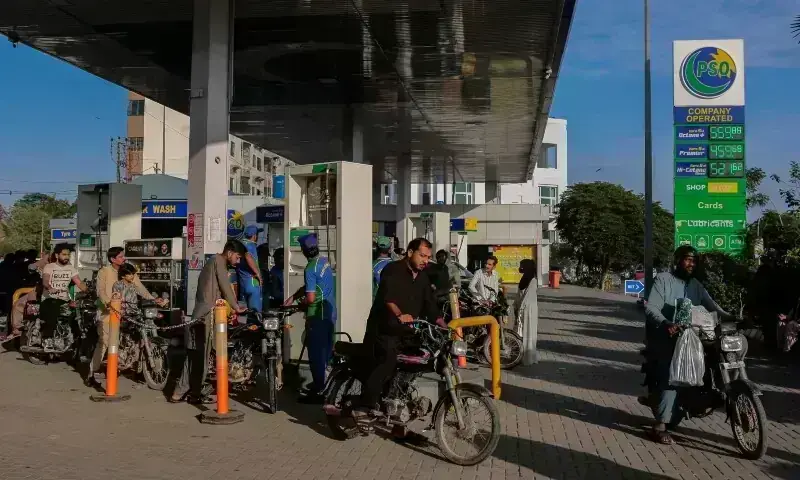
THE prime minister’s decision to subsidise petrol purchases for motorcycle and small-car owners is understandable amid consumer outcry against high fuel rates. But it is unlikely to offer much relief.
The Rs75bn package may sound substantial but is barely a fraction of annual petrol sales. Its reach will be narrower because eligibility depends on conditions such as vehicle and SIM ownership. A monthly subsidy of Rs2,000 for motorcycles and Rs3,000 for small cars may help households, but cannot shield them from sustained global oil price increases. Nor does it assist those who rely on public transport. The question that arises is whether the government is trying to soften the political impact of another fuel price shock.
The government must rethink the relief architecture. The BISP National Socio-Economic Registry already has a mechanism to target assistance by household income. Additional support through this system would be more equitable than subsidising a particular fuel purchase. Cash transfers are preferable because recipients can decide whether they need petrol, bus fare, food or another essential. Fuel subsidies make that choice for them and risk encouraging consumption of an imported commodity when foreign exchange pressures are rising.
The demand is for a cut in the petroleum levy for broader relief. But the government has little fiscal space for that. Slashing it would create another fiscal hole. Islamabad should, instead, work with the provinces to support public transport users through targeted — and transparent — assistance.
The other problem that subsidies cannot solve concerns rising prices of food and other essentials. Fuel price hikes are passed on by transporters and traders to consumers through higher fares and commodity prices; reductions rarely produce equivalent decreases. Provincial and district administrations must monitor this asymmetric pricing more seriously. The global oil market outlook offers little comfort due to the uncertainty caused by the Middle East conflict. Petrol was around $135 a barrel at the end of last week, against the $120-122 benchmark underlying domestic calculations. Every $1 increase in the global benchmark is estimated to add around Rs1.80 per litre to domestic petrol prices. A sustained $10 rise in annual average oil prices could add $1bn-$1.25bn to Pakistan’s import bill, further draining scarce foreign exchange.
The pressure could intensify in winter as lower hydropower generation increases reliance on imported fuels and raises electricity costs. The government’s dilemma is clear: higher fuel prices fuel inflation and hurt households, while subsidies put pressure on imports and the fiscal deficit. It has no painless option. Relief must therefore follow need, not vehicle ownership. A poor household using public transport deserves no less consideration than a relatively better-off motorcycle or a small car owner.
Published in Dawn, September 15th, 2026
The post Rethinking relief appeared first on Dawn – Home.