PAKISTAN can’t achieve sustained economic growth by treating security as a separate problem for the security apparatus to handle while economists focus on investment, exports, productivity and fiscal reform.
Insecurity destroys the very conditions on which economic development depends, while development strengthens the foundations of security. Our crisis makes this nexus impossible to ignore. For decades, discussions on investment, production, growth, and development have largely focused on economic policies while underestimating the non-economic environment in which they operate. Yet, security of life and property, political stability, rule of law, judicial independence, federal-provincial coordination, accountability, and regional peace directly affect economic outcomes. Unless these improve, returns from economic reforms will remain below potential.
Increasing militancy and Pakistan’s top position on the Global Terrorism Index 2026 are damaging lives and economic prospects. The recent attack on a police compound in Kohat, in which 37 people, including military personnel, were killed, received international coverage. Foreign business people and executives reportedly cancelled planned visits, while travel advisories issued by several governments can discourage their nationals from visiting Pakistan. In 2025, TTP attacks in KP and BLA strikes in Balochistan caused hundreds of casualties among security personnel. The past decade’s trend shows that terrorism is no longer episodic. It is a structural constraint on investment, trade, tourism, development and employment.
The origins of the TTP challenge go back several decades. Pakistan’s decision in the 1980s to align with the US in opposing the Soviet occupation of Afghanistan had consequences beyond the immediate strategic goal. The proliferation of arms and drugs, sectarian violence, growth of militant groups and the spread of extremist ideologies created a social and institutional environment that facilitated terrorism in Pakistan.
After the Soviets left Afghanistan, Pakistan became involved in efforts to shape a political settlement among Afghan factions. The failure of power-sharing arrangements and the ensuing civil war led to the emergence of the Taliban, who captured Kabul in 1996. Pakistan supported their regime. But 9/11 fundamentally altered the situation. Pakistan joined the global campaign against terrorism, itself becoming a major target. When the US decided to leave Afghanistan, Pakistan played an important role in the Doha process. The Ashraf Ghani government’s collapse in 2021 and the Taliban’s return led to expectations that cross-border terrorism would decline. Instead, the TTP, now equipped with modern weapons left behind by Nato forces, intensified their attacks.
The challenge is to build security through development, and development through security.
Diplomatic efforts involving China, Saudi Arabia and Türkiye have not produced a durable solution. Insecurity along the western frontier has disrupted bilateral trade, imposing costs on manufacturers, traders and transport operators, especially in KP and Balochistan. Security and commerce are now directly linked. Balochistan poses a different but equally serious challenge. It has seen a sharp escalation in asymmetric warfare and insurgency. Highways, railways, bridges, gas pipelines, electricity transmission lines, and other infrastructure have been targeted. Mine workers, labourers from other provinces and government officials have been attacked or abducted. In places, the state’s administrative presence and writ have been weakened.
The economic consequences are immediate. Chinese nationals and companies in Pakistan need extensive security. Attacks on Chinese citizens in Karachi, Dasu and elsewhere have led to concerns in Beijing and slowed some CPEC-related activities. Gwadar’s industrial potential remains largely unrealised, partly because Chinese companies are reluctant to deploy personnel in insecure conditions. An industrial zone won’t flourish when investors can’t operate confidently.
Security operations alone can’t resolve Balochistan’s problem. Kinetic action is necessary against militants but must be accompanied by development. Balochistan suffers from serious deficits in education, health, clean water, infrastructure, employment and private investment. When economic opportunities are few, grievances become a source of recruitment for insurgent groups. So the province needs not just security spending but also a development strategy to create jobs, boost local institutions, and ensure communities see tangible benefits from Balochistan’s natural resources and strategic location. Regional instability adds to the problem. Disruption of trade with Iran and closure or restriction of border crossings such as Chaman have hurt exporters and communities that rely on cross-border commerce. Clearly, peace is not just a diplomatic aim; it is an economic asset.
Pakistan must use its diplomatic capital to promote regional economic integration. Better ties with Afghanistan, structured dialogue with India, stable relations with Iran, and expanded links with Central Asian states can enlarge its economic space. Afghanistan, Iran, north India, and Central Asia can be important markets for Pakistani goods and services. Gwadar could become a transshipment and logistics gateway for landlocked Central Asian economies, generating transit revenues and creating opportunities for Pakistani exporters. Uzbekistan, Kyrgyzstan and Tajikistan offer markets that Pakistan has so far penetrated modestly. Regional connectivity can revive projects such as the Iran-Pakistan gas pipeline, TAPI, and CASA, subject to their political, financial, commercial, and security feasibility.
Greater regional trade will create demand for transport, logistics, warehousing, banking, insurance, IT and manufacturing. It will create jobs and give border communities greater economic stake in stability. None of this means that economic reforms should wait for peace. Quite the contrary. Fiscal reform, energy sector restructuring, taxation, deregulation, privatisation, export diversification, human capital development and institutional reform must continue uninterrupted. But they must be supported by steps that reduce the security premium imposed on economic activity.
Security and development are two sides of the same national strategy. Insecurity raises transaction costs, discourages investment, destroys infrastructure, disrupts trade, deters foreign personnel and limits employment. Lack of economic opportunity, weak institutions and regional isolation can deepen the conditions in which insecurity flourishes. The goal should be to create an economy in which security, development and opportunity reinforce each other. Military capability can suppress threats. But only sustained economic development, effective institutions, political stability and regional peace can remove many of the conditions that allow those threats to regenerate.
Our choice is not between security and development. The challenge is to build security through development, and development through security. Until that nexus becomes the organising principle of policy, economic reforms will operate below their potential and Pakistan will remain vulnerable to cycles of instability, low investment and weak growth.
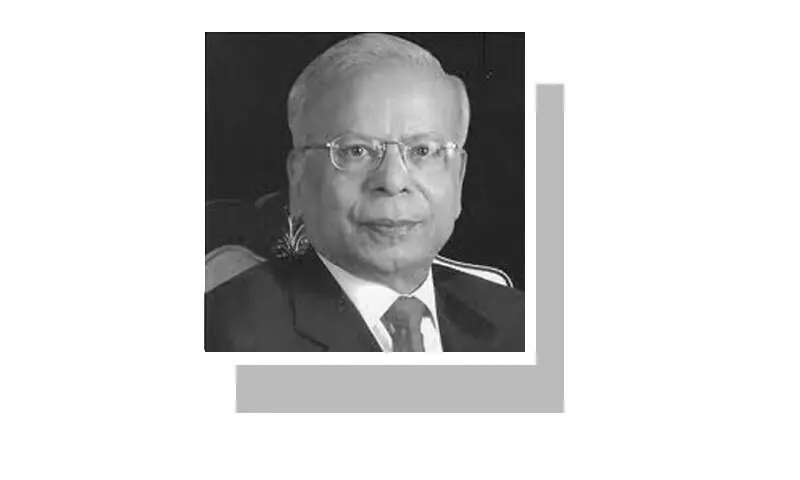
The writer is a former State Bank governor.
Published in Dawn, September 29th, 2026
The post Security-development nexus appeared first on Dawn – Home.